How to Make Notes from NCERT for IAS Preparation
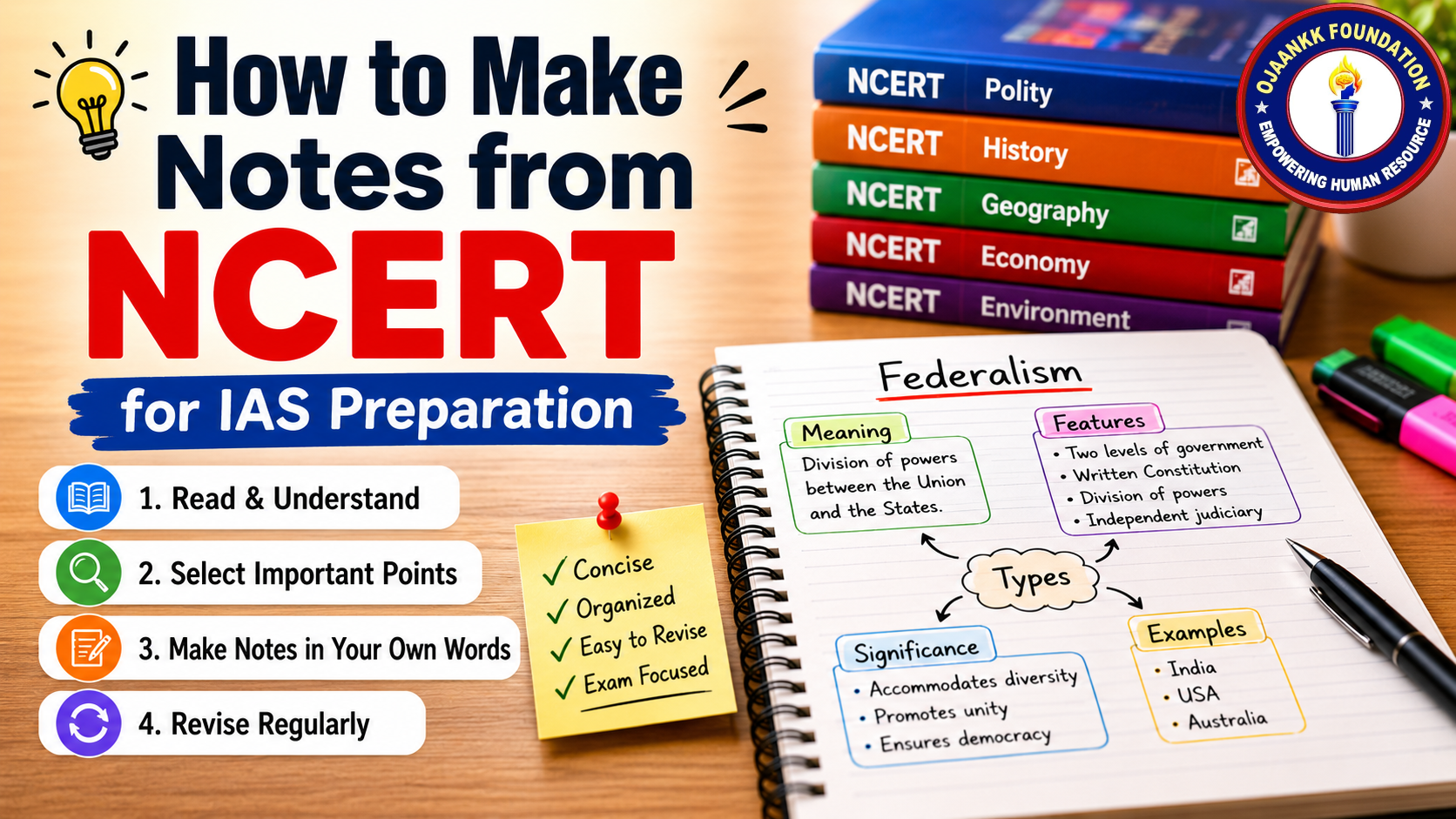
IAS Preparation के लिए NCERT से Notes कैसे बनाएं?
Complete Beginner’s Guide, Smart Note-Making Strategy और Effective Revision Plan
परिचय
हर UPSC Aspirant अपनी तैयारी की शुरुआत NCERT Books से करता है, लेकिन सबसे बड़ा सवाल यह होता है:
“UPSC Preparation के लिए NCERT से Effective Notes कैसे बनाएं?”
कई छात्र:
-
बहुत लंबे Notes बना लेते हैं
-
पूरी किताब कॉपी कर देते हैं
-
समझे बिना Notes लिखते हैं
-
Notes को जरूरत से ज्यादा सजाने में समय लगा देते हैं
-
या बिल्कुल Notes नहीं बनाते
जिसके कारण:
-
Revision कठिन हो जाता है
-
Retention कमजोर हो जाती है
-
Preparation बिखरी हुई लगने लगती है
UPSC Preparation में Smart Note-Making बेहद महत्वपूर्ण है क्योंकि UPSC का Syllabus बहुत बड़ा है और सफलता का सबसे बड़ा आधार है:
-
Revision
-
Concept Clarity
-
Structured Preparation
अच्छे NCERT Notes Aspirants को मदद करते हैं:
-
Faster Revision
-
Better Retention
-
Answer Writing Improvement
-
Current Affairs Integration
-
Time Management
इस ब्लॉग में हम समझेंगे:
-
NCERT से Effective Notes कैसे बनाएं
-
Subject-Wise Note-Making Strategy
-
Handwritten vs Digital Notes
-
Common Mistakes
-
Toppers की Best Revision Techniques
UPSC Preparation में NCERT Notes क्यों महत्वपूर्ण हैं?
NCERT Notes महत्वपूर्ण हैं क्योंकि ये:
-
Revision आसान बनाते हैं
-
Concepts लंबे समय तक याद रखने में मदद करते हैं
-
Information को व्यवस्थित करते हैं
-
Quick Recall में मदद करते हैं
-
Bulky Books पर Dependency कम करते हैं
UPSC Preparation में जरूरी होता है:
-
Multiple Revision
-
Topic Interlinking
-
Fast Access to Important Concepts
बिना Proper Notes के Exam के पास Revision कठिन हो जाता है।
अच्छे NCERT Notes कैसे होने चाहिए?
अच्छे UPSC Notes होने चाहिए:
-
Short
-
Concept-Based
-
Easy to Revise
-
Organized
-
Keyword-Oriented
-
Prelims और Mains दोनों के लिए Useful
Students को Avoid करना चाहिए:
-
पूरे Paragraphs लिखना
-
Over Highlighting
-
Excessive Decoration
-
Unnecessary Details
याद रखें:
Notes का उद्देश्य किताब दोबारा लिखना नहीं, बल्कि Revision आसान बनाना है।
NCERT से Notes बनाने की Step-by-Step Strategy
Step 1: पहले Chapter को Properly समझें
Notes बनाने से पहले:
-
पूरे Chapter को ध्यान से पढ़ें
-
Concepts समझें
-
Important Themes पहचानें
-
Topic का Core Idea समझें
पहली Reading में सीधे Notes बनाना शुरू न करें।
पहले:
✔ Understand
फिर:
✔ Summarize
Step 2: Important Information पहचानें
Reading के दौरान Focus करें:
-
Definitions
-
Important Facts
-
Constitutional Terms
-
Examples
-
Diagrams
-
Government Schemes
-
Dates & Timelines
-
Keywords
खुद से पूछें:
“क्या UPSC यहाँ से Question पूछ सकता है?”
अगर हाँ, तो उसे Notes में शामिल करें।
Step 3: Notes Simple Language में लिखें
आपके Notes होने चाहिए:
-
Short
-
Simple
-
Easy to Revise
NCERT की Language को Copy-Paste न करें।
Instead:
-
Paragraphs को Points में बदलें
-
Headings/Subheadings का उपयोग करें
-
Keywords लिखें
-
Flowcharts बनाएं
Step 4: 3-Level Note-Making Method अपनाएं
Level 1: Basic Notes
लिखें:
-
Core Concepts
-
Definitions
-
Important Points
Level 2: Current Affairs जोड़ें
NCERT Topics को Link करें:
-
Current Events
-
Government Schemes
-
Reports
-
Committees
उदाहरण:
-
Climate Change → COP Summits
-
Parliament → Current Bills
-
Inflation → RBI Policy
Level 3: Mains Value Addition
Notes में जोड़ें:
-
Examples
-
Data
-
Case Studies
-
Diagrams
-
Keywords
इससे Notes दोनों के लिए उपयोगी बनते हैं:
-
Prelims
-
Mains
Subject-Wise NCERT Note-Making Strategy
1. History Notes
Focus करें:
-
Timelines
-
Dynasties
-
Important Personalities
-
Freedom Movements
-
Art & Culture
Best Technique
✔ Timeline Format
✔ Flowcharts
✔ Short Factual Points
लंबी Story-Type Notes बनाने से बचें।
2. Geography Notes
Focus करें:
-
Maps
-
Climate
-
Physical Geography
-
Agriculture
-
Resources
Best Technique
✔ Diagrams
✔ Maps
✔ Tables
✔ Flowcharts
Geography में Visual Notes सबसे ज्यादा Effective होते हैं।
3. Polity Notes
Focus करें:
-
Constitutional Articles
-
Fundamental Rights
-
Parliament
-
Judiciary
-
Federalism
Best Technique
✔ Article-Wise Notes
✔ Comparative Tables
✔ Constitutional Keywords
4. Economy Notes
Focus करें:
-
GDP
-
Inflation
-
Banking
-
Fiscal Policy
-
Economic Terms
Best Technique
✔ Flowcharts
✔ Examples
✔ Current Affairs Integration
Economy Visual Simplification से आसान हो जाती है।
5. Environment Notes
Focus करें:
-
Biodiversity
-
Ecosystems
-
Climate Change
-
Environmental Organizations
Best Technique
✔ Tables
✔ Species Lists
✔ International Conventions
6. Science Notes
Focus करें:
-
Biotechnology
-
Space
-
Health
-
Technology
Best Technique
✔ Short Points
✔ Diagrams
✔ Concept Summaries
Handwritten Notes vs Digital Notes
Handwritten Notes
Advantages
-
Better Retention
-
Strong Memory Recall
-
Easy Revision
Disadvantages
-
Time-Consuming
-
Difficult to Edit
Digital Notes
Advantages
-
Easy Organization
-
Searchable
-
Editable
-
Easy Current Affairs Integration
Disadvantages
-
Screen Distraction
-
कुछ Students के लिए कम Retention
Best Strategy क्या होनी चाहिए?
अधिकांश Toppers सलाह देते हैं:
-
Static Subjects → Handwritten Notes
-
Current Affairs → Digital Notes
ऐसी Method चुनें जो:
-
आपका Time बचाए
-
Revision आसान बनाए
-
आपकी Comfort के अनुसार हो
Notes कितने लंबे होने चाहिए?
कई Students बहुत ज्यादा लिखते हैं।
Ideal UPSC Notes:
-
20 Pages को 2–3 Pages में Convert करें
-
केवल Important Points रखें
-
Revision-Friendly हों
याद रखें:
Short Notes = Faster Revision = Better Retention
Students की Common Mistakes
1. पूरी NCERT Copy करना
यह Time Waste करता है।
2. Decorative Notes बनाना
UPSC में महत्व है:
-
Understanding
-
Revision
-
Consistency
का, Decoration का नहीं।
3. Excessive Details लिखना
Notes में:
✔ Essentials रखें
❌ Unnecessary Explanation नहीं
4. Notes Revision न करना
Notes बनाना तभी उपयोगी है जब उनका Revision हो।
5. बहुत ज्यादा Sources इस्तेमाल करना
Limited और Reliable Sources पर टिके रहें।
NCERT Notes की Smart Revision Strategy
1. 24 Hours के अंदर Revision करें
Quick Revision Retention बढ़ाता है।
2. Weekly Revision करें
हर सप्ताह Important Subjects दोहराएँ।
3. Monthly Consolidation करें
Notes को जोड़ें:
-
Current Affairs
-
PYQs
-
Mock Tests
के साथ।
4. Keywords Highlight करें
Use करें:
-
Underlining
-
Boxes
-
Keywords
ताकि Recall तेज हो।
UPSC Prelims में NCERT Notes कैसे मदद करते हैं?
NCERT Notes मदद करते हैं:
-
Static GK
-
Quick Factual Revision
-
Conceptual MCQs
-
Environment & Geography
में।
Short Notes Prelims से पहले Speed बढ़ाते हैं।
UPSC Mains में NCERT Notes कैसे मदद करते हैं?
NCERT Notes सुधारते हैं:
-
Answer Structure
-
Concept Clarity
-
Analytical Thinking
-
Revision Efficiency
विशेष रूप से:
-
Essay
-
Ethics
-
Society
-
Governance
Topics में।
निष्कर्ष
Effective NCERT Notes बनाना UPSC Preparation की सबसे Smart Strategies में से एक है। अच्छे Notes Aspirants को:
-
Faster Revision
-
Better Retention
-
Improved Answer Writing
-
Time Management
में मदद करते हैं।
UPSC में सफलता केवल किताबें पढ़ने से नहीं मिलती, बल्कि:
-
Smart Revision
-
Concept Clarity
-
Consistency
-
Effective Note-Making
से मिलती है।
सबसे अच्छे Notes वही होते हैं जो:
-
Short हों
-
Organized हों
-
Revision-Friendly हों
-
Concept-Oriented हों
याद रखें:
UPSC Preparation में Excessive Reading से ज्यादा महत्वपूर्ण है Effective Revision।
और अच्छे NCERT Notes Revision को Powerful और Efficient बनाते हैं।
FAQs
1. क्या हर NCERT Chapter से Notes बनाना जरूरी है?
नहीं। केवल UPSC-Relevant और Important Topics से Notes बनाएं।
2. Handwritten Notes बेहतर हैं या Digital Notes?
दोनों उपयोगी हैं। वही Method चुनें जो आपकी Revision और Retention बेहतर करे।
3. NCERT Notes कितने लंबे होने चाहिए?
Notes Short, Crisp और Revision-Friendly होने चाहिए।
4. NCERT Notes कितनी बार Revision करने चाहिए?
Regular Revision जरूरी है। अधिकांश Toppers कई बार Revision करते हैं।
5. क्या NCERT Notes Prelims और Mains दोनों में मदद करते हैं?
हाँ। Properly Prepared NCERT Notes दोनों Exams के लिए अत्यंत उपयोगी होते हैं।