How to Make Notes from NCERT for IAS Preparation
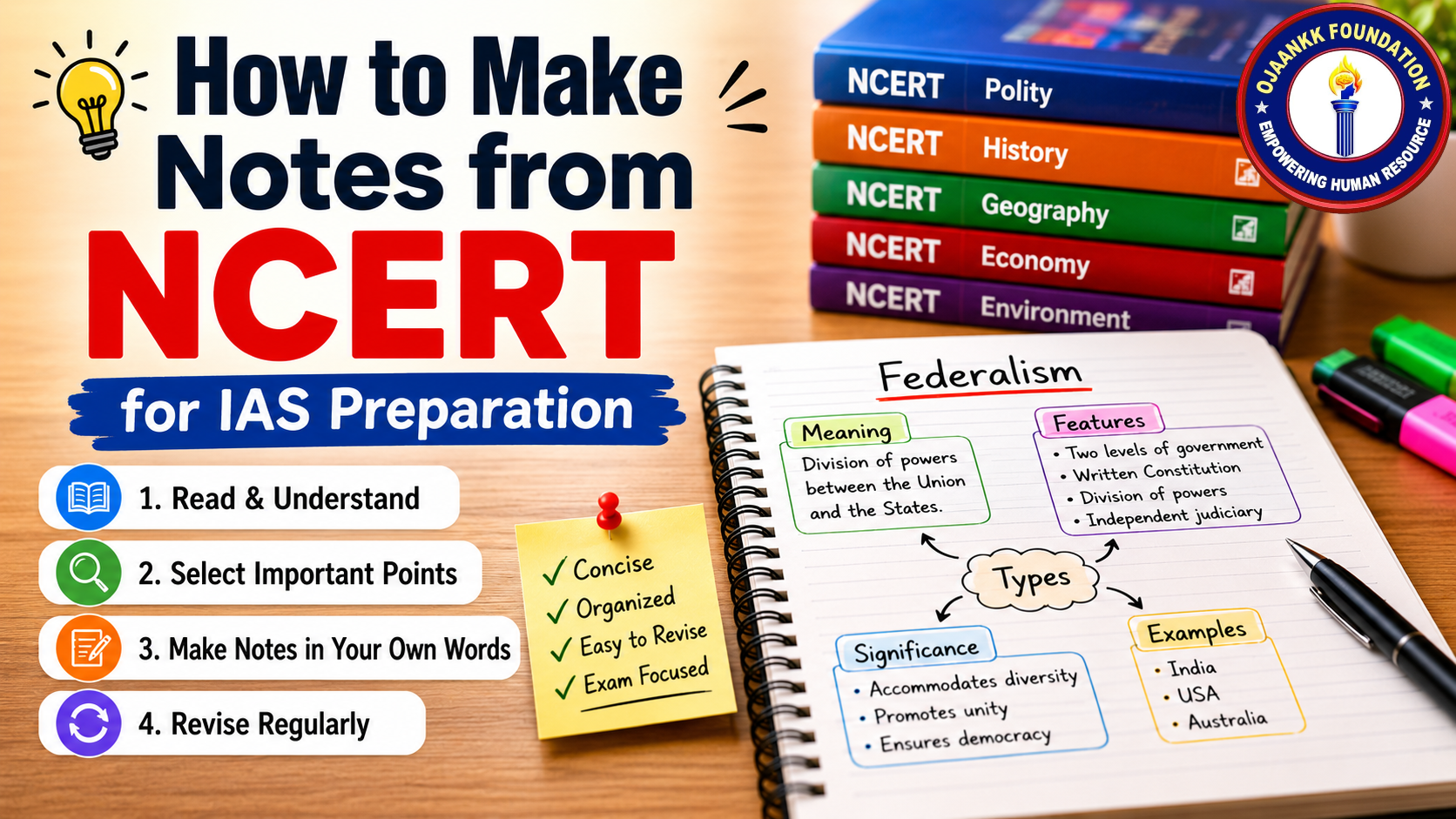
How to Make Notes from NCERT for IAS Preparation
Complete Beginner’s Guide, Smart Note-Making Strategy & Effective Revision Plan
Introduction
Every UPSC aspirant starts preparation with NCERT books, but one major challenge most students face is
“How should I make notes from NCERT for IAS preparation?”
Many beginners either
-
Write excessively long notes
-
Copy entire paragraphs
-
Make notes without understanding concepts
-
Spend too much time decorating notes
-
Or avoid note-making completely
As a result:
-
Revision becomes difficult
-
Retention becomes weak
-
Preparation becomes disorganized
In UPSC preparation, smart note-making is extremely important because the syllabus is vast and revision becomes the key to success.
Well-structured NCERT notes help aspirants:
-
Revise faster
-
Remember concepts longer
-
Improve answer writing
-
Connect static and current affairs
-
Save time before Prelims and Mains
This blog explains:
-
How to make effective NCERT notes for UPSC
-
Subject-wise note-making strategy
-
Digital vs handwritten notes
-
Common mistakes students make
-
Best revision techniques used by toppers
Why are NCERT Notes Important for UPSC?
NCERT notes are important because they:
-
Simplify revision
-
Improve retention
-
Organize information systematically
-
Help in quick recall during exams
-
Reduce dependency on bulky books
UPSC preparation requires:
-
Multiple revisions
-
Interlinking of topics
-
Quick access to important concepts
Without proper notes, revision becomes difficult closer to the exam.
What Makes Good NCERT Notes?
Good UPSC notes should be:
-
Short
-
Concept-based
-
Easy to revise
-
Organized subject-wise
-
Rich in keywords
-
Useful for both Prelims and Mains
Aspirants should avoid:
-
Writing textbook paragraphs
-
Over-highlighting
-
Excessive decoration
-
Unnecessary details
Remember:
Notes are meant for revision, not rewriting the book.
Step-by-Step Strategy to Make NCERT Notes for UPSC
Step 1: Read the Chapter Properly First
Before making notes:
-
Read the entire chapter carefully
-
Understand concepts clearly
-
Identify important themes
-
Focus on conceptual understanding
Never start making notes during the first line-by-line reading.
First:
✔ Understand
Then:
✔ Summarize
Step 2: Identify Important Information
While reading, focus on:
-
Definitions
-
Important facts
-
Constitutional terms
-
Examples
-
Diagrams
-
Government schemes
-
Dates & timelines
-
Keywords
Ask yourself:
“Can UPSC ask a question from this point?”
If yes, include it in notes.
Step 3: Write Notes in Simple Language
Your notes should be:
-
Short
-
Simple
-
Easy to revise
Avoid copying NCERT language directly.
Instead:
-
Convert paragraphs into points
-
Use headings & subheadings
-
Use keywords
-
Create flowcharts where possible
Step 4: Use the 3-Level Note-Making Method
Level 1: Basic Notes
Write:
-
Core concepts
-
Definitions
-
Important points
Level 2: Add Current Affairs
Link NCERT topics with:
-
Current events
-
Government schemes
-
Reports
-
Committees
Example:
-
Climate Change → COP Summits
-
Parliament → Current Bills
-
Inflation → RBI Policy
Level 3: Add Mains Value Addition
Include:
-
Examples
-
Data
-
Case studies
-
Diagrams
-
Keywords for answer writing
This makes notes useful for both:
-
Prelims
-
Mains
Subject-Wise NCERT Note-Making Strategy
1. History Notes
Focus on:
-
Timelines
-
Dynasties
-
Important personalities
-
Freedom movements
-
Art & culture
Best Technique:
✔ Timeline format
✔ Flowcharts
✔ Short factual points
Avoid lengthy storytelling notes.
2. Geography Notes
Focus on:
-
Maps
-
Climate
-
Physical geography
-
Agriculture
-
Resources
Best Technique:
✔ Diagrams
✔ Maps
✔ Tables
✔ Flowcharts
Visual notes work best for Geography.
3. Polity Notes
Focus on:
-
Constitutional Articles
-
Fundamental Rights
-
Parliament
-
Judiciary
-
Federalism
Best Technique:
✔ Article-wise notes
✔ Comparative tables
✔ Constitutional keywords
4. Economy Notes
Focus on:
-
GDP
-
Inflation
-
Banking
-
Fiscal policy
-
Economic terms
Best Technique:
✔ Flowcharts
✔ Examples
✔ Current affairs integration
Economy becomes easier when simplified visually.
5. Environment Notes
Focus on:
-
Biodiversity
-
Ecosystems
-
Climate change
-
Environmental organizations
Best Technique:
✔ Tables
✔ Species lists
✔ International conventions
6. Science Notes
Focus on:
-
Biotechnology
-
Space
-
Health
-
Technology
Best Technique:
✔ Short factual points
✔ Diagrams
✔ Concept summaries
Handwritten Notes vs Digital Notes
Handwritten Notes
Advantages
-
Better retention
-
Improved memory
-
Easy for revision
Disadvantages
-
Time-consuming
-
Difficult to edit
Digital Notes
Advantages
-
Easy to organize
-
Searchable
-
Editable
-
Good for current affairs integration
Disadvantages
-
Screen distraction
-
Lower retention for some students
Best Strategy
Most toppers recommend:
-
Handwritten notes for static subjects
-
Digital notes for current affairs updates
Choose whichever method:
-
Saves time
-
Improves revision
-
Matches your comfort
How Much Should You Write?
A common mistake is writing too much.
Ideal UPSC notes should:
-
Reduce 20 pages into 2–3 pages
-
Include only important points
-
Be revision-friendly
Remember:
Short notes = Faster revision = Better retention
Common Mistakes Students Make While Making Notes
1. Copying Entire NCERT
This wastes time and defeats the purpose of notes.
2. Making Decorative Notes
UPSC rewards:
-
Understanding
-
Revision
-
Consistency
not artistic presentation.
3. Writing Excessive Details
Notes should contain:
✔ Essentials
❌ Unnecessary explanation
4. Not Revising Notes
Making notes alone is useless without revision.
5. Using Too Many Sources
Stick to limited and reliable material.
Smart Revision Strategy for NCERT Notes
1. Revise Within 24 Hours
Quick revision improves retention.
2. Weekly Revision
Revise important subjects every week.
3. Monthly Consolidation
Combine notes with:
-
Current affairs
-
PYQs
-
Mock tests
4. Highlight Keywords
Use:
-
Keywords
-
Underlining
-
Boxes
for faster recall.
How NCERT Notes Help in UPSC Prelims
NCERT notes help in:
-
Static GK
-
Quick factual revision
-
Conceptual MCQs
-
Environment & Geography
Short notes improve speed before Prelims.
How NCERT Notes Help in UPSC Mains
NCERT notes improve:
-
Answer structure
-
Conceptual clarity
-
Analytical thinking
-
Revision efficiency
They are especially useful for:
-
Essay
-
Ethics
-
Society
-
Governance
topics.
Conclusion
Making effective NCERT notes is one of the smartest strategies for UPSC preparation. Good notes help aspirants:
-
Revise faster
-
Retain concepts longer
-
Improve answer writing
-
Save time during revision
UPSC success depends not only on reading books but also on:
-
Smart revision
-
Concept clarity
-
Consistency
-
Effective note-making
The best notes are:
-
Short
-
Organized
-
Revision-friendly
-
Concept-oriented
Remember:
In UPSC preparation, revision wins over excessive reading.
And good NCERT notes make revision powerful and efficient.
FAQs
1. Should I make notes from every NCERT chapter?
No. Make notes only from important and UPSC-relevant topics.
2. Are handwritten notes better than digital notes?
Both are useful. Choose the method that improves your revision and retention.
3. How long should NCERT notes be?
NCERT notes should be short, crisp, and revision-friendly.
4. How many times should NCERT notes be revised?
Regular revision is important. Most toppers revise notes multiple times before the exam.
5. Can NCERT notes help in both Prelims and Mains?
Yes. Properly prepared NCERT notes are useful for both UPSC Prelims and Mains preparation.