Longest Solar Eclipse of the 21st Century
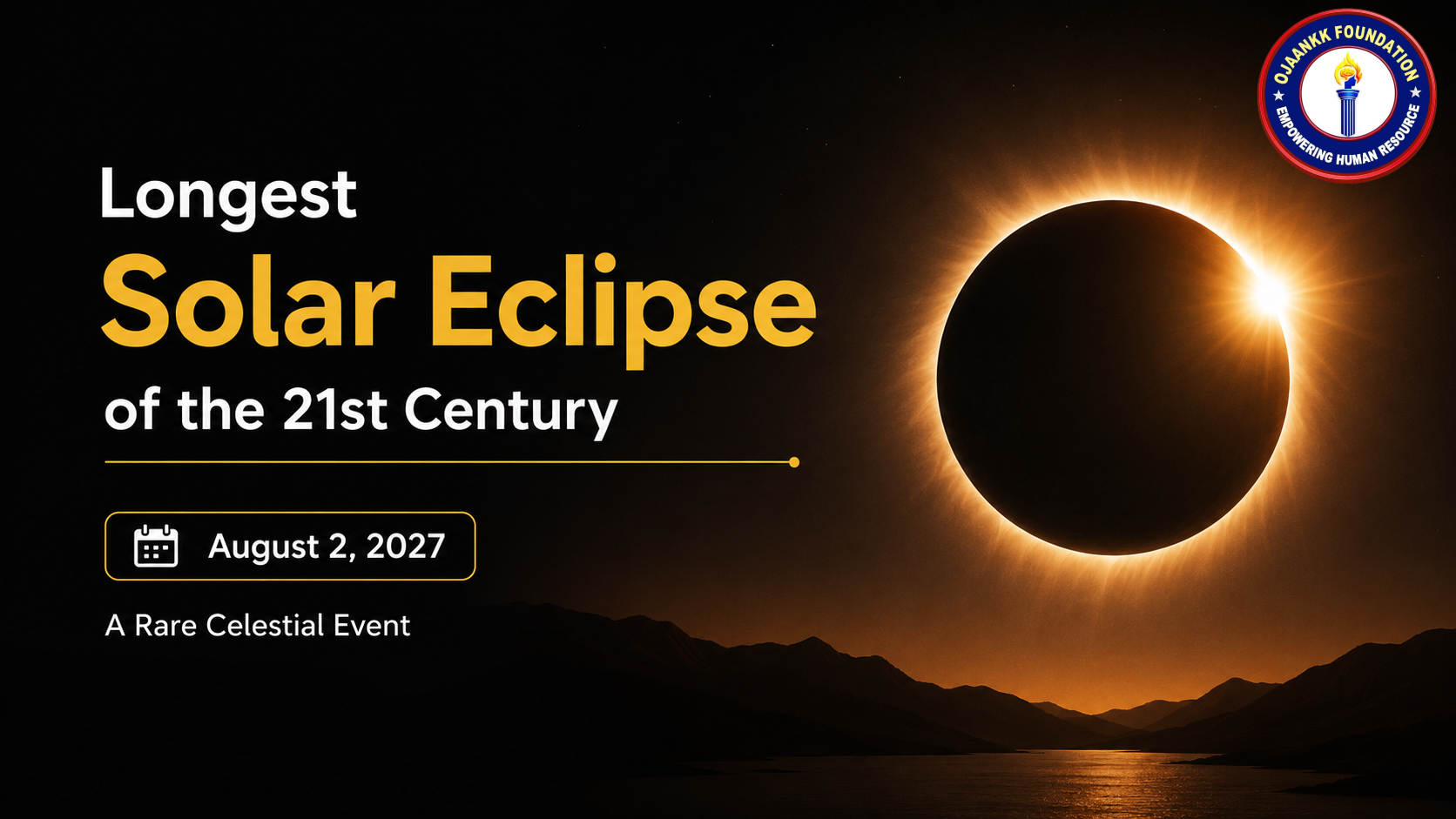
Longest Solar Eclipse of the 21st Century: A Rare Celestial Event on August 2, 2027
Introduction
The year 2027 is set to witness one of the most spectacular astronomical events of the century. On August 2, 2027, skywatchers across parts of the world will experience the longest total solar eclipse of the 21st century.
Astronomers predict that the eclipse will last for approximately 6 minutes and 23 seconds at its maximum duration, making it the longest total solar eclipse visible on Earth between 2001 and 2100.
This rare event is expected to attract millions of astronomy enthusiasts, researchers, photographers, and travelers from around the globe.
What Is a Total Solar Eclipse?
A total solar eclipse occurs when the Moon passes directly between the Earth and the Sun, completely blocking the Sun's visible surface.
During totality:
-
Daylight suddenly turns into darkness.
-
The Sun's outer atmosphere, known as the corona, becomes visible.
-
Bright stars and planets may appear in the daytime sky.
-
Temperatures can temporarily drop.
-
Animals may behave as if night has arrived.
Why Is the 2027 Eclipse So Special?
The August 2, 2027 eclipse is unique because it will provide one of the longest periods of totality seen in modern times.
Several astronomical factors contribute to this:
-
The Moon will appear relatively larger in the sky.
-
The Earth will be positioned at a favorable point in its orbit.
-
The eclipse path will pass through regions where viewing conditions are ideal.
As a result, observers in certain locations will experience over six minutes of complete darkness.
When Will the Eclipse Occur?
Date: August 2, 2027
Type: Total Solar Eclipse
Maximum Duration: Approximately 6 minutes 23 seconds
This duration is significantly longer than most total solar eclipses, which typically last between 2 and 4 minutes.
Where Will the Eclipse Be Visible?
The path of totality will cross several countries in Europe, North Africa, and the Middle East.
Best Viewing Locations
- Egypt
- Luxor
- New Valley Region
- Libya
- Saudi Arabia
- Sudan
- Yemen
Among all locations, Egypt is expected to offer one of the longest and clearest views of totality.
Will the Eclipse Be Visible in India?
India is expected to witness only a partial solar eclipse during this event.
While the Sun will not be completely covered, observers in some regions may still be able to see a portion of the Sun obscured by the Moon.
The exact visibility will depend on location and local weather conditions.
Scientific Importance of the Eclipse
Solar eclipses are not just spectacular visual events; they also provide valuable opportunities for scientific research.
During totality, scientists can study:
-
The Sun's corona
-
Solar magnetic fields
-
Solar wind activity
-
Effects on Earth's atmosphere
-
Changes in temperature and light conditions
The extended duration of the 2027 eclipse will provide researchers with more observation time than usual.
Safety Tips for Viewing the Eclipse
Looking directly at the Sun without protection can cause permanent eye damage.
Safe Viewing Methods
-
Use certified solar eclipse glasses.
-
Use solar filters on telescopes and binoculars.
-
Watch live broadcasts if proper equipment is unavailable.
-
Never look directly at the Sun through a camera, telescope, or binoculars without certified solar filters.
Travel and Tourism Opportunities
The eclipse is expected to boost astro-tourism significantly.
Popular destinations such as Luxor in Egypt are already being discussed as prime viewing locations due to their clear skies and long duration of totality.
Travel experts predict a large influx of visitors from around the world for this once-in-a-lifetime event.
Conclusion
The August 2, 2027 Total Solar Eclipse is expected to be one of the most remarkable astronomical events of the century. With a maximum duration of approximately 6 minutes and 23 seconds, it will offer an unforgettable experience for observers and a valuable opportunity for scientific research.
Whether you are an astronomy enthusiast, traveler, photographer, or simply curious about the universe, this historic eclipse promises to be a truly extraordinary spectacle.