United Nations Security Council Explained: Functions, Veto Power and India’s UNSC Ambition
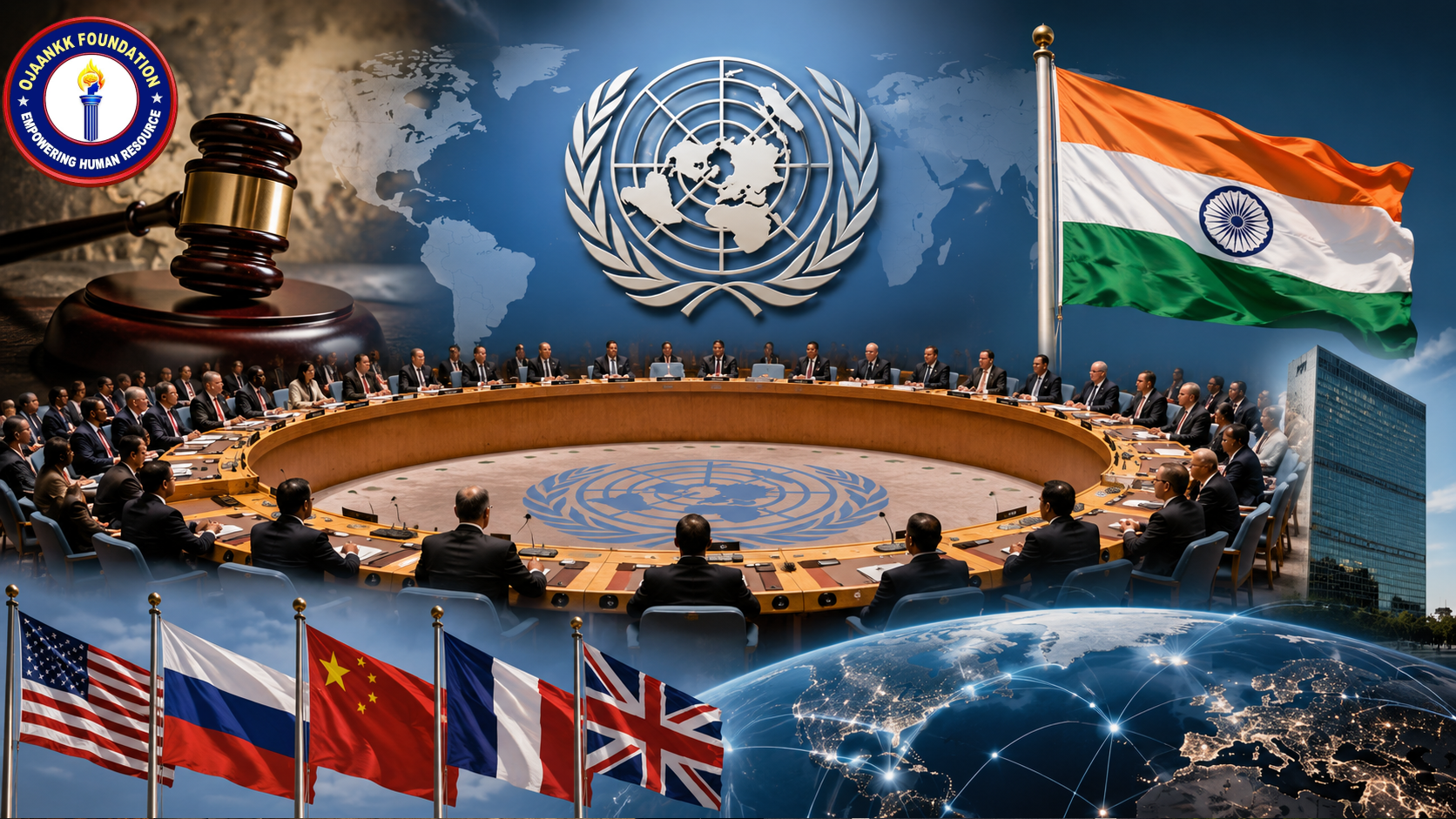
United Nations Security Council (UNSC): Global Peace, Veto Power and India’s Permanent Membership Debate
Introduction
The United Nations Security Council (UNSC) is considered one of the most powerful international bodies in the world. Its primary responsibility is to maintain global peace and security. Whenever the world faces:
-
Wars
-
Terrorism
-
Nuclear threats
-
Humanitarian crises
-
International conflicts
the UNSC becomes the most important global decision-making platform.
In recent years:
-
Russia–Ukraine War
-
Israel–Hamas Conflict
-
China–Taiwan tensions
-
Global terrorism
-
India’s demand for permanent membership
have once again brought the UNSC into global focus.
Today, the UNSC is not just an international institution—it is a symbol of global power balance, diplomacy, and geopolitical influence.
What is the UNSC?
The United Nations Security Council (UNSC) is the most powerful organ of the United Nations (UN), established in 1945 after World War II.
Its primary objectives are:

-
Maintaining international peace
-
Preventing conflicts
-
Imposing sanctions
-
Authorizing peacekeeping missions
-
Approving military action when necessary
Unlike many UN bodies, several UNSC resolutions are legally binding on member states.
How Many Members are in the UNSC?
The UNSC has a total of 15 members.
1. Permanent Members (P5)
The five permanent members are:
-
United States
-
Russia
-
China
-
France
-
United Kingdom
These countries possess special Veto Power.
2. Non-Permanent Members
The remaining 10 members:
-
Are elected for two-year terms
-
Represent different geographical regions
India has served multiple times as a non-permanent member of the UNSC.
What is Veto Power?
Veto Power is one of the most controversial features of the UNSC.
If any permanent member votes against a resolution:
-
The resolution cannot pass
-
Even if all other members support it
This has often created geopolitical deadlock.
Examples:
-
Russia vetoed several resolutions related to Ukraine
-
The United States vetoed multiple resolutions concerning Israel
-
China has used veto power on strategic geopolitical issues
Major Functions of the UNSC
1. Maintaining International Peace
The UNSC works to prevent wars and international conflicts.
2. Imposing Sanctions
It can impose:
-
Economic sanctions
-
Trade restrictions
-
Arms embargoes
against countries or organizations.
3. Peacekeeping Missions
The UNSC authorizes UN Peacekeeping Forces in conflict regions.
India is among the world’s largest contributors to UN Peacekeeping Missions.
4. Approving Military Action
In severe situations, the UNSC can authorize international military intervention.
Why is the UNSC So Powerful?
The UNSC possesses:
-
Legal authority
-
Sanction powers
-
Military authorization capability
-
Global political influence
Its decisions directly impact:
-
International security
-
Global economy
-
Diplomacy
-
Geopolitical relations
Why Does India Want Permanent Membership in the UNSC?
India has long demanded:
-
UNSC Reform
-
Permanent membership expansion
India’s major arguments include:
1. World’s Largest Democracy
India is the largest democratic country in the world.
2. Massive Population
India is the world’s most populous nation.
3. Major Global Economy
India is among the fastest-growing major economies.
4. Peacekeeping Contributions
India has made significant contributions to UN peacekeeping operations.
5. Voice of the Global South
India represents the interests of developing countries and emerging economies.
Challenges to India’s Permanent Membership
1. China’s Opposition
China has often indirectly opposed India’s permanent membership ambitions.
2. Lack of Consensus on Reform
Global agreement on expanding permanent membership remains difficult.
3. Debate Over Veto Reform
Many countries demand:
-
Limiting veto power
or -
Abolishing veto power entirely
which complicates reform discussions.
Why is UNSC Reform Necessary?
The current UNSC structure reflects the geopolitical realities of 1945, not today’s world.
Major criticisms include:
-
Overrepresentation of Western powers
-
Underrepresentation of Africa and Latin America
-
Weak representation of developing nations
-
Excessive influence of veto powers
As global power dynamics change, many countries demand:
-
Greater representation
-
Democratic reform
-
Expansion of permanent membership
What is the G4 Group?
The G4 Group consists of:
-
India
-
Japan
-
Germany
-
Brazil
These countries support each other’s bid for permanent UNSC membership.
UNSC and Modern Global Conflicts
Russia–Ukraine War
Russia’s veto power limited UNSC action against the conflict.
Israel–Hamas Conflict
US vetoes blocked several resolutions related to ceasefire proposals.
China–Taiwan Tensions
The UNSC has also become important in Indo-Pacific geopolitical discussions.
Is the UNSC Still Effective?
Positive Aspects
-
Peacekeeping missions
-
International diplomatic coordination
-
Global conflict management
Criticisms
-
Veto politics
-
Dominance of major powers
-
Slow decision-making
-
Structural imbalance
India’s Future Role in the UNSC
India consistently advocates:
-
Multilateralism
-
Global governance reform
-
Equal representation
India’s growing influence through:
-
G20
-
BRICS
-
Global South leadership
has strengthened its global diplomatic position.
Experts believe UNSC reform debates will become even more important in the coming years.
Conclusion
The United Nations Security Council remains one of the world’s most influential international institutions, but changing geopolitical realities have intensified demands for structural reform.
Issues such as:
-
Veto Power dominance
-
Unequal representation
-
Geopolitical deadlock
have raised serious questions about the effectiveness and fairness of the current system.
Emerging global powers like India are increasingly demanding:
-
More democratic global governance
-
Balanced representation
-
Reform of international institutions
In the future, UNSC reform will not merely be a diplomatic issue — it will significantly shape the global power balance and the future world order.
FAQs
1. What is the UNSC?
The United Nations Security Council is the most powerful organ of the United Nations responsible for maintaining international peace and security.
2. How many members are there in the UNSC?
The UNSC has 15 members:
-
5 permanent members
-
10 non-permanent members
3. What is Veto Power?
Veto Power allows any permanent member to block a resolution, even if all other members support it.
4. Why does India want permanent membership in the UNSC?
India argues that its population size, democratic system, economic strength, and peacekeeping contributions justify permanent membership.
5. Why is UNSC Reform being demanded?
Many countries believe the current UNSC structure reflects outdated post-World War II realities and does not represent today’s global power balance fairly.
Click here for more blogs:
https://www.ojaank.com/blog/daily-current-affairs